

Table of Contents
- Quick Comparison: 5 Best Full Tang Bushcraft Knives
- How We Evaluated These Full Tang Bushcraft Knives
- 1. Bushcraft Knife | BC1: The Heavy-Duty Workhorse
- 2. Trailblazer | TB1 - Bowie Knife: The Chopping Powerhouse
- 3. Rapid Axe: The Camp Chore Specialist
- 4. Trail Hunter Knife: The Precision Skinner
- 5. Pack-Pro Knife with Kydex Sheath: The Ultralight Option
- Full Tang vs Partial Tang Knives: Why It Matters for Camping
- Frequently Asked Questions
Last Updated: September 12, 2026
Quick Comparison: 5 Best Full Tang Bushcraft Knives
A full tang bushcraft knife is a fixed-blade tool where the steel runs the entire length of the handle, giving you maximum strength for splitting wood, carving, and camp chores. This guide from Rapid River Knifeworks covers five full tang bushcraft knives for camping, all built for serious field work.

At Rapid River Knifeworks, we've hand-crafted knives since 2002, and we've watched the same question come up for years: how much blade do you actually need? The short answer is that a full tang bushcraft knife beats a partial tang every time in the field, because the steel carries the load instead of the handle material. Below, we'll break down five options by task, price, and steel so you can match the knife to the work.
Knife |
Price |
Best For |
Steel |
|---|---|---|---|
$300 |
Heavy batoning and splitting |
D2 tool steel.200" thick |
|
Trailblazer | TB1 - Bowie Knife |
$400 |
Chopping and heavy clearing |
Full tang bowie profile |
$300 |
Camp chores and limb work |
Full tang axe build |
|
Trail Hunter Knife |
$185 |
Precision skinning and dressing |
Full tang hunting profile |
Pack-Pro Knife with Kydex Sheath |
$125 |
Ultralight backcountry carry |
D2 tool steel |
How We Evaluated These Full Tang Bushcraft Knives
Every knife here earned its spot on tang construction, steel choice, and how it handles real camp work. We weighted four factors: edge retention, corrosion resistance, handle ergonomics, and whether the blade geometry suits batoning, feather sticking, or field dressing.
We also considered weight-to-utility ratio, since a heavy knife you leave in the truck is useless. A full tang bushcraft knife should feel balanced in hand and survive years of camp chores without loosening. Full tang construction is the baseline for wilderness survival work because it eliminates the weak point where partial tang blades snap under stress.
1. Bushcraft Knife | BC1: The Heavy-Duty Workhorse
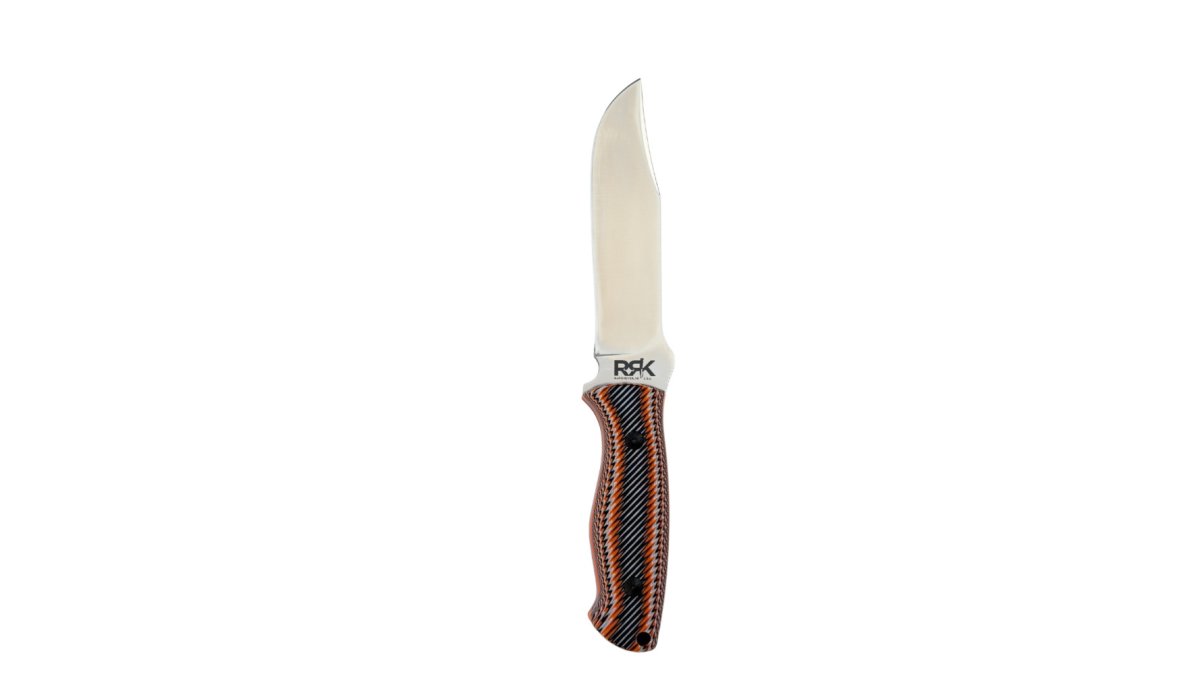
The BC1 is our answer to the moments when the backcountry stops playing nice. At .200" thickness in D2 tool steel, this blade splits frozen hardwood and still handles fine field dressing work. It's the heaviest knife on this list, and that's the point.
Performance and Specs
D2 tool steel holds an edge longer than most stainless steels, and at .200" spine thickness the BC1 takes real batoning abuse. The full tang runs the length of the handle, so chopping performance stays consistent. Rockwell hardness sits in the range D2 is known for, giving strong edge retention without becoming brittle.
Pros and Cons
What works: crushing power for splitting, a spine thick enough for fire steel compatibility, and a handle built for gloved hands.
What doesn't: it's heavy, and D2 needs more care against corrosion than stainless steel. Wipe it down and oil it after wet use.
2. Trailblazer | TB1 - Bowie Knife: The Chopping Powerhouse
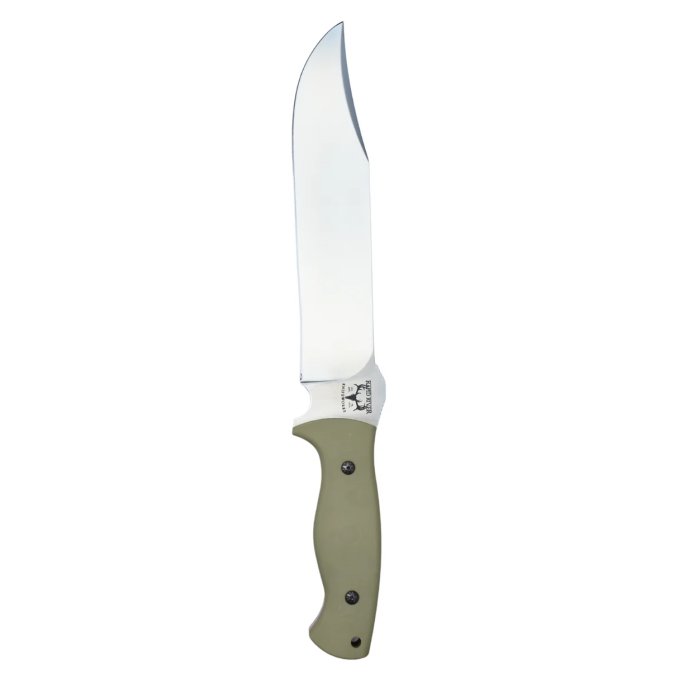
If you want a full tang bushcraft knife that doubles as a chopper, the Trailblazer TB1 delivers. The bowie blade profile puts weight forward for limb clearing and heavy chopping, while the full tang keeps the handle rigid under repeated impact.
Performance and Specs
The bowie geometry gives this knife a long cutting edge and a drop point tip that still works for detail tasks. Full tang construction means the pommel can take light hammering. The handle ergonomics favor a choked-back grip for swinging.
Pros and Cons
What works: excellent chopping performance, a blade profile that clears brush fast, and a lanyard hole for retention in wet conditions.
What doesn't: the size makes it awkward for fine skinning work. This is a camp knife first.
3. Rapid Axe: The Camp Chore Specialist
Not every camp task calls for a knife, and the Rapid Axe covers the gap. It's built for splitting kindling, working limbs, and processing firewood, with the same full tang strength standard as the rest of this list.

Performance and Specs
The axe head design concentrates force for efficient splitting. It pairs well with a full tang bushcraft knife: use the axe for wood processing, the knife for carving and food prep. Together they cover most camp chores.
Pros and Cons
What works: fast firewood processing and less fatigue than batoning a knife all evening.
What doesn't: it's a single-purpose tool. You still need a knife for anything requiring a fine edge.
4. Trail Hunter Knife: The Precision Skinner
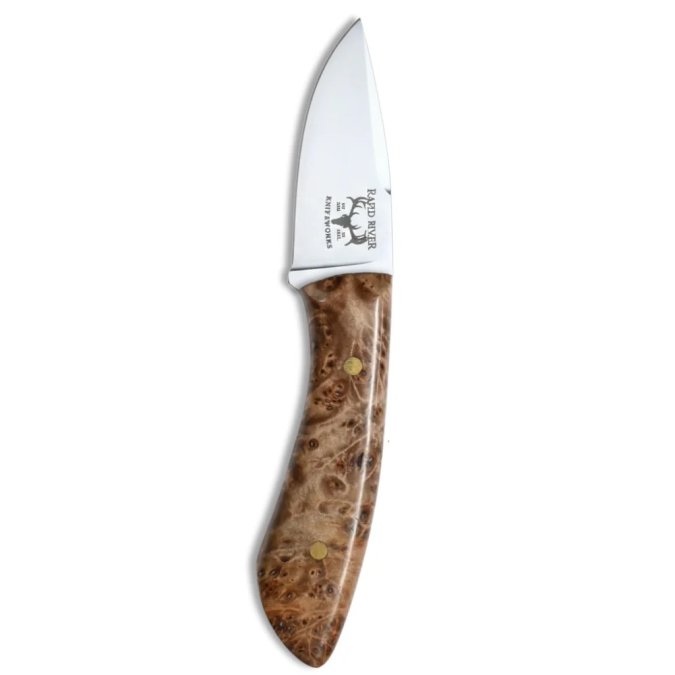
The Trail Hunter is the knife you reach for when the work gets delicate. At $185, it's the value pick for hunters who need a full tang bushcraft knife for field dressing and skinning without the weight of a chopper.
Performance and Specs
The blade profile favors controlled cuts, with a tip shape suited to opening game and working around joints. Full tang construction keeps the blade solid through repeated dressing work. The handle ergonomics support a firm, precise grip.
Pros and Cons
What works: precision for skinning, a comfortable handle for long sessions, and a price that leaves room for the BC1.
What doesn't: it won't replace a chopper for splitting. Pair it with an axe for wood work.
5. Pack-Pro Knife with Kydex Sheath: The Ultralight Option
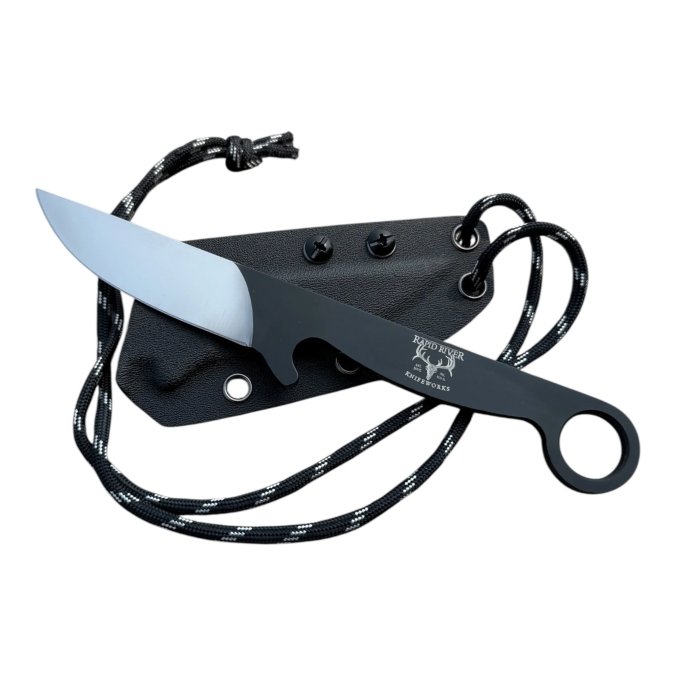
Go far. Carry less. The Pack-Pro weighs in as the lightest full tang bushcraft knife here, with a slim profile that disappears on your pack or around your neck. At $125, it's the easiest entry point into a hand-crafted full tang blade.
Performance and Specs
D2 tool steel gives the Pack-Pro strong edge retention despite its light build. The Kydex sheath offers secure sheath retention and quick deployment, and the slim handle suits smaller hands or neck carry. It handles field dressing and everyday camp chores without complaint.
Pros and Cons
What works: light weight, secure Kydex carry, and D2 steel in a compact package.
What doesn't: it's not built for heavy batoning. Use it as a companion blade, not a splitting tool.
Full Tang vs Partial Tang Knives: Why It Matters for Camping
Full tang vs partial tang knives comes down to where the steel ends. A full tang runs the full length of the handle; a partial tang stops partway, often as a stick tang or half tang. Under batoning stress, that shorter tang is the failure point.
For camping and wilderness survival, full tang construction is the safer choice. The trade-off is weight, which is why the Pack-Pro exists for ultralight setups. If you split wood regularly, choose full tang every time.
What Is the Best Steel for Bushcraft Knives?
Carbon steel and D2 tool steel take a keener edge and hold it longer; stainless steel resists corrosion better in wet conditions. For most camping use, D2 offers a strong middle ground: excellent edge retention with reasonable care requirements.
Bushcraft Knife Maintenance Tips
Dry the blade after every wet outing, apply a thin coat of oil, and touch up the edge with a field sharpener before it dulls completely. Store knives in their sheath, not loose in a pack, to protect both edge and fingers.
Frequently Asked Questions
What is the best full-tang knife for bushcraft?
The best full-tang knife for bushcraft depends on your specific needs. For heavy-duty tasks like batoning and chopping, the Bushcraft Knife | BC1 with its .200-inch thick D2 tool steel blade is an excellent choice. If you prefer a lighter option for field dressing and camp chores, the Pack-Pro Knife with Kydex Sheath offers D2 steel in a slim profile. Consider blade thickness, steel type, and handle ergonomics to match your primary use.
Why is a full-tang design important for camping knives?
A full-tang design extends the steel from the tip of the blade through the entire handle, providing superior strength and durability. This construction handles batoning, chopping, and prying without the blade snapping at the handle junction. For camping and bushcraft, where you rely on your knife for fire prep and shelter building, full tang ensures the knife won't fail when you need it most.
How do I maintain a high-carbon steel bushcraft knife?
High-carbon steel like D2 offers excellent edge retention but requires regular maintenance. Dry the blade immediately after use, apply a thin coat of oil to prevent corrosion, and sharpen with a diamond stone or ceramic rod to maintain the edge. For bushcraft knife maintenance tips, avoid storing the knife in its sheath long-term, as trapped moisture can cause rust. Touch up the edge after each trip.
What blade length is ideal for a bushcraft knife?
Most bushcraft experts recommend a blade length between 4 and 5 inches. This size handles carving, feather sticking, and food prep while remaining controllable for detailed tasks. A blade longer than 5 inches becomes unwieldy for fine work, while shorter blades lack the reach for batoning larger logs. The 5 best full tang bushcraft knives for camping typically fall within this range.
Are custom-made bushcraft knives worth the investment?
Custom or hand-crafted bushcraft knives offer superior materials, individual attention to heat treatment, and often a lifetime warranty. Brands like Rapid River Knifeworks have been hand-crafting knives since 2002, with D2 tool steel and full tang construction. While the upfront cost is higher than mass-produced options, the durability, edge retention, and personalized features like custom engraving make them a worthwhile investment for serious outdoorsmen.