

Table of Contents
- The Holy Grail Pocket Knife: Defining the Concept
- Objective Criteria That Separate a Grail From a Good Knife
- The Best Everyday Carry Pocket Knife: Balancing Function and Collectibility
- A Pocket Knife Steel Types Guide for Grail Hunters
- How to Choose a Bushcraft Utility Knife That Earns Grail Status
- Authentication, Provenance, and Investment Potential
- Post-Grail Syndrome: What Happens After You Find It
- Frequently Asked Questions
Last Updated: September 28, 2026
The Holy Grail Pocket Knife: Defining the Concept
Ask ten collectors "What is the holy grail of pocket knives?" and you will get ten different answers, the first thing to understand before you chase someone else's dream knife.
A holy grail pocket knife is a specific, often hard-to-find folding knife that represents the peak of a collector's personal search, combining rarity, craftsmanship, and personal meaning in a way that no other knife in their collection can match.

The term borrows from Arthurian legend, where the grail is not simply a valuable object but the object of a lifelong quest. In knife collecting, that translates to a blade you have wanted for years, searched for across shows and online listings, and would not sell even if offered far more than you paid. The American Bladesmith Society's guide to hand-forged cutlery offers useful context on why handcrafted blades carry meaning that mass-produced ones rarely do.
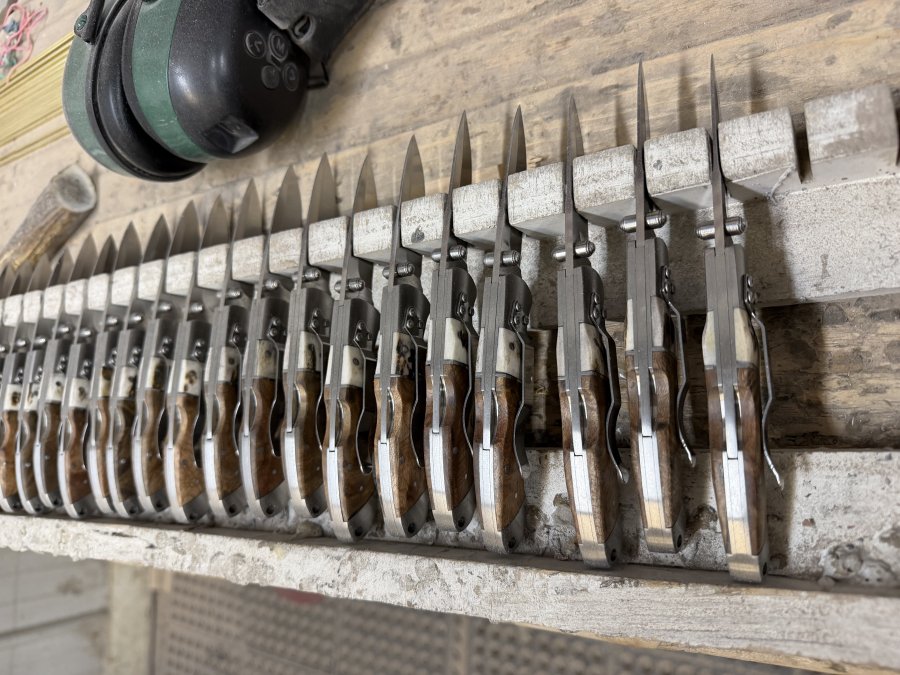
Why the Grail Is Personal, Not Universal
No single knife is universally the grail. A vintage slipjoint with a rare tang stamp might be one person's prize; a custom build with mammoth ivory handles another's. The common thread is the story behind why it matters.
One collector may hunt for years for the exact folder pattern their grandfather carried; another may chase a maker's heat treatment. The grail is a moving target.
Objective Criteria That Separate a Grail From a Good Knife
Plenty of knives are good; few earn grail status. The difference is measurable, not hype.
- Rarity: Limited production runs, discontinued patterns, or one-of-one custom builds carry more weight than mass-produced models.
- Provenance: A documented history, original packaging, or a known maker's mark adds verifiable value.
- Fit and finish: Tight tolerances, even grinds, and clean transitions between handle and blade separate craft from assembly.
- Materials: Premium handle material and a well-executed heat treatment matter more than a famous name.
- Personal connection: A knife tied to a specific hunt, gift, or milestone carries meaning no spec sheet can capture.
Only one of the five is purely emotional; the rest you can inspect and verify. That balance separates a genuine grail from a knife you simply like.
Criterion |
What to Check |
Why It Matters |
|---|---|---|
Rarity |
Production numbers, discontinued status |
Limits supply, protects long-term value |
Provenance |
Tang stamp, paperwork, original box |
Proves authenticity and history |
Fit and finish |
Blade centering, handle gaps, lockup |
Signals real craftsmanship |
Materials |
Steel type, handle material, heat treatment |
Determines performance and longevity |
Personal connection |
Story, memory, milestone |
Makes the knife yours alone |
The Best Everyday Carry Pocket Knife: Balancing Function and Collectibility
The best everyday carry pocket knife is one you actually carry, not one you keep in a safe. Most new collectors buy a beautiful knife, decide it is too nice to use, and carry a cheap beater instead.

A true grail earns its status partly because it works. Carry comfort, deployment action, and lock reliability matter as much as handle figure; a knife too heavy or stiff to open one-handed stays home.
This is where handcrafted knives beat factory production. A maker finishing each knife to order can tune the walk and talk, adjust blade centering, and match handle ergonomics to a specific hand. Rapid River Knifeworks builds every folding knife this way, one at a time, which is why the Yooper Pocket Knife serves as both a daily carry tool and a piece worth passing down. Its high-carbon steel blade and natural handle materials, from elk antler to Arizona desert ironwood, mean no two are alike.
A Pocket Knife Steel Types Guide for Grail Hunters
Steel choice is where collectors get lost in marketing. What matters most is heat treatment, not the alloy's name: a well-treated 1095 blade outperforms a poorly treated supersteel every time.
The alloy still sets the ceiling.
- High-carbon steels (1095, 5160, 52100, CPM 3V): These take a very fine edge, sharpen easily on a stone, and develop a patina with use. They need more care against corrosion, but they reward that care with character. 1095 is the classic choice for traditional slipjoints and bushcraft folders; CPM 3V trades some stain resistance for exceptional toughness.
- Stainless steels (154CM, CPM 154, S30V, S35VN, S45VN, MagnaCut): These resist corrosion and hold an edge longer between sharpenings, at the cost of being harder to sharpen in the field. S30V and its descendants S35VN and S45VN are the modern benchmark for production folders. MagnaCut, introduced in 2021, is notable for combining high corrosion resistance with edge retention and toughness that older stainless grades could not match simultaneously.
- Tool steels (D2, CPM M4, CPM Cru-Wear): These sit in the middle, offering strong edge retention and good toughness for hard outdoor use. D2 is the most common semi-stainless tool steel in production knives; CPM M4 and Cru-Wear are favored by users who prioritize wear resistance over polish.
- Damascus and pattern-welded steels: Prized for visual appeal and craftsmanship, though performance depends entirely on the base steels used. A pattern-welded billet made from 1084 and 15N20 will behave very differently from one built on stainless layers. For a grail piece, the pattern is part of the story, not a performance claim.
How to Choose a Bushcraft Utility Knife That Earns Grail Status
Choosing a bushcraft utility knife comes down to three things: blade profile, handle ergonomics, and how it feels after an hour of real work. A grail-worthy blade is one you would trust on a week-long trip with no backup.
Authentication, Provenance, and Investment Potential
Authentication separates serious collectors from hopeful ones. A knife without verifiable provenance cannot be resold with confidence, and the vintage and custom market has a real counterfeit problem, buyers who get burned almost always skipped verification.
How to Verify a Grail Knife Before You Buy
Start with the tang stamp. Every established maker has a documented stamp, letters, placement, font, and era. A stamp slightly off, or on a pattern the maker never produced, is a red flag. Reference books and maker archives are the standard check; major collector organizations maintain stamp references serious buyers consult before any significant purchase.
What Actually Drives Value on the Secondary Market
Investment potential exists but is narrower than the internet suggests. Three factors do most of the work:
- Rarity with documentation. A discontinued pattern with a known production number and original paperwork holds value. The same pattern without documentation is a guess.
- Maker reputation over time. Knives from makers with established, decades-long careers tend to hold value because the supply is fixed and the reputation is not going anywhere. Hype-driven makers are a different bet.
- Condition and originality. Original finish, original handle material, and no aftermarket modifications. A re-handled knife is a user, not a collectible.
Post-Grail Syndrome: What Happens After You Find It
The strangest part of grail collecting is what happens after you finally get the knife. Collectors call it post-grail syndrome, and it is real: the hunt provided the excitement, and once the knife is in your hand, a strange emptiness follows.
Frequently Asked Questions
Is there a single holy grail pocket knife for everyone?
No. The holy grail pocket knife is personal, shaped by what you value most: a specific blade steel, a handle material with family history, a tang stamp from a certain era, or a custom build from a maker you trust. A grail for a bushcraft user who prizes edge retention may be entirely different from one for a collector chasing vintage slipjoint patterns. Define your own criteria before you start hunting.
What features define a high-quality pocket knife?
Look at blade steel and heat treatment, handle ergonomics, fit and finish, and the walk and talk of the action. A quality folder opens smoothly, locks up tight with no blade play, and holds an edge through real work. Check the tang stamp for maker identification, inspect the grind for consistency, and test carry comfort in your actual pocket. Materials matter, but execution matters more.
How does steel quality affect the performance of a pocket knife?
Steel determines edge retention, corrosion resistance, and how easily you can sharpen the blade. High-carbon steels take a keen edge and sharpen readily but need more care against rust. Stainless options resist corrosion better in wet field conditions. Heat treatment matters as much as the steel itself: a well-treated mid-range steel often outperforms a poorly treated premium one in daily use.
What is the difference between a mass-produced and a hand-crafted pocket knife?
Mass-produced knives are machined to identical specs, so every unit is interchangeable. Hand-crafted knives are finished one at a time, which means natural handle materials vary, fit and finish receive individual attention, and no two are exactly alike. For a grail, that uniqueness matters. A handcrafted piece carries the maker's decisions in every detail, from blade profile to handle figure.